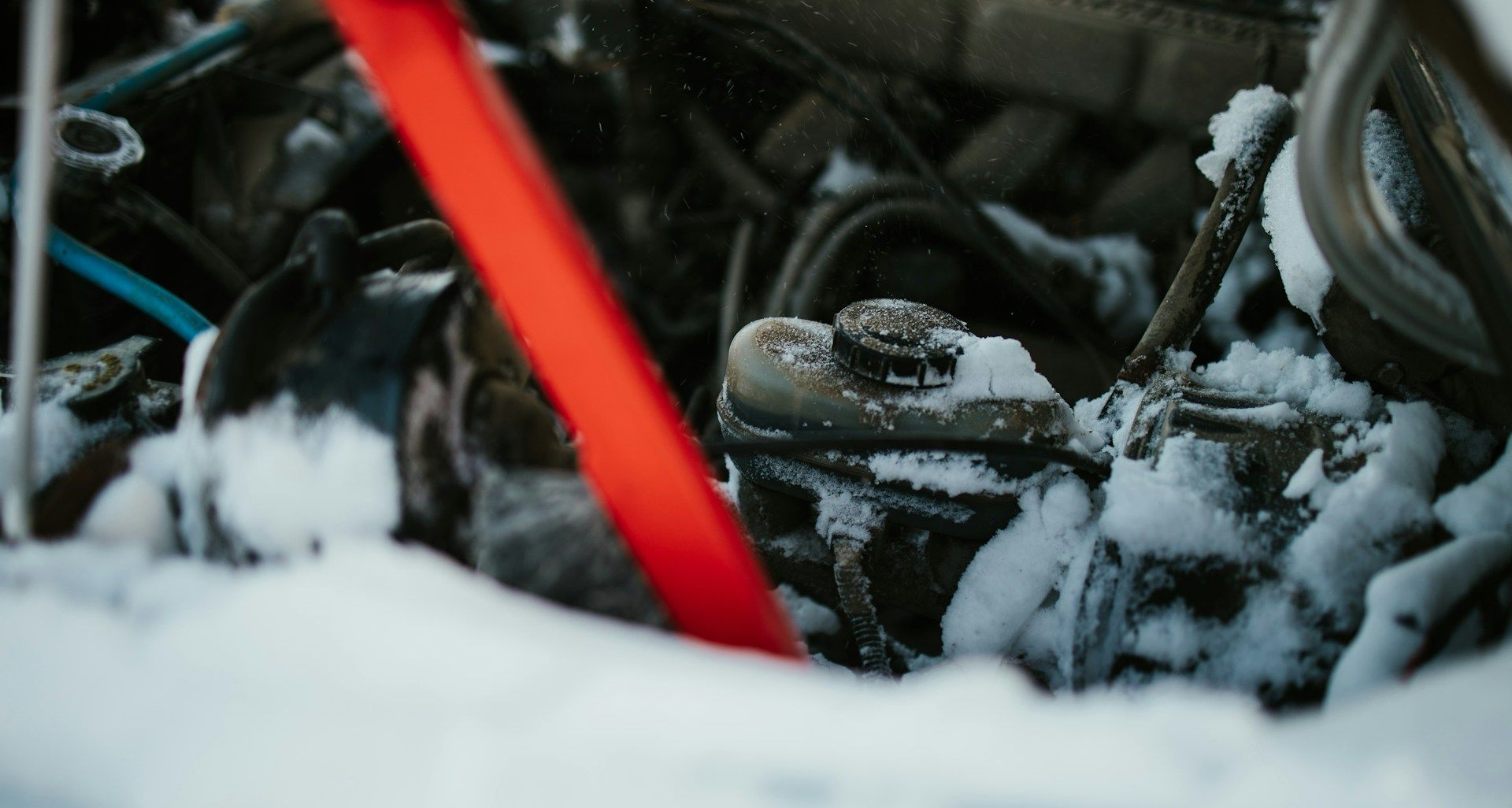
In winter, many drivers recall old tricks.
Taking the car battery out overnight to keep it in a warm garage.
Covering the hood with a blanket or cardboard.
Simple, a bit makeshift, but it works.
And importantly, no one treated it like a car breakdown. It was simply a reaction to the frost.
It's very similar with a power generator. Except here, no one approaches it daily, starts it up before work, and notices when something starts to weaken. The generator sits, waits, and is supposed to work when it's truly needed. And winter is the moment when all oversights come to light at once.
When a diesel engine doesn't start in low temperatures, it's rarely a mysterious failure. Most often, it's the same set of problems we know from cars: a weak battery, fuel unsuitable for winter, faulty preheating, or a lack of proper diagnostics. The difference is that there's no room for improvisation with a blanket and hope in a generator.
In this article, we go through these causes one by one, the things that truly decide whether a diesel generator will start in winter or just become an expensive piece of scenery.
Generator battery. Winter shows no mercy to those that are half-functional
If a diesel generator doesn't start in winter, the battery is always the first suspect.
And for good reason. It's a component that ages slowly, often without clear warning signs.
In autumn, it still cranks. In the garage, it still works. At positive temperatures, it seems fine.
In winter, it stops pretending.
In a diesel engine, a battery has a harder life than in a petrol one.
Starting requires higher cranking speed, more current, and longer cranking time. Low temperatures further reduce its ability to deliver energy. The effect is simple. A battery that was sufficient in summer stops being sufficient in winter.
A common mistake is that the user checks the resting voltage.
A multimeter shows 12.6 V. The conclusion is one. The battery is good. Unfortunately, that's only half the truth. What matters is the voltage under load, i.e., what happens at the moment of starting. If the voltage drops sharply during cranking, the starter motor loses speed, and the diesel engine doesn't reach the conditions for self-ignition.
Then there are the connections.
Terminals, ground cables, contact points with the generator frame. In summer, minimal corrosion often goes unnoticed. In winter, every bit of additional electrical resistance acts like a half-pulled handbrake. The starter cranks, but not as it should.
In standby generators, the problem deepens even more. The battery often operates in standby mode. Lack of regular start cycles, lack of recharge, sometimes lack of maintenance. After a few years, such a battery only looks good on paper.
What to check first:
✔ Battery condition under load during starting.
✔ Voltage drops on positive and ground cables.
✔ Condition of terminals and grounding points.
✔ The actual age of the battery (not necessarily matching the date in the documentation ;)
If the generator doesn't start in winter, and the battery is several years old and has never been load-tested, further diagnostics without this check is a waste of time.
Fuel. Diesel in winter remembers more than you think
The second classic reason why a diesel generator won't start in winter is in the tank. Fuel. Or more precisely, what happens to diesel fuel when the temperature drops.
Diesel is not a homogeneous liquid.
It contains paraffin fractions that start to precipitate at low temperatures.
First, the fuel becomes cloudy. Then it thickens. Finally, paraffin clogs the fuel filter and the engine stops receiving the proper amount of fuel. The starter cranks, the engine tries, but has nothing to run on.
In a car, this often ends with a short stop and a call for help. In a generator, it can be worse. The generator sits in one place, often outside or in an unheated container. If the fuel was filled without considering the season, a problem is just a matter of time.
A very common scenario looks like this:
The generator was fueled in autumn. It ran a few times at positive temperatures. Everything was fine. The first solid frost comes, and suddenly the engine won't start. Fuel is in the tank, the filter looks clean, yet nothing happens.
In reality, the fuel filter may be clogged with paraffin, invisible to the naked eye. Sometimes, just slightly raising the ambient temperature is enough for the generator to start. This is misleading because it gives the illusion that the problem solved itself. With the next frost, the situation returns.
Add to that water in the fuel. Condensation of moisture in the tank is normal, especially during long periods of inactivity. In winter, the water freezes, blocking fuel flow or damaging parts of the fuel system. The fuel filter in a generator isn't a magic barrier. It has its limits too.
If a diesel generator doesn't start in winter, it's worth checking:
✔ Whether the fuel was filled as winter-grade fuel.
✔ The condition of the fuel filter and any signs of cloudiness.
✔ The presence of water in the water separator or filter.
✔ The conditions in which the fuel tank is stored.
Fuel is a topic that in winter forgives no neglect. And unfortunately, it is often downplayed because "the fuel is there, so the problem must be elsewhere" 😈

There is fuel, the can is full, but the generator still won't start. In winter, diesel fuel can have a mind of its own, especially when it wasn't prepared for the season. CC: Freepik/jcomp
The generator cranks but doesn't start... meaning diagnostics without the guessing game
The situation looks familiar.
The starter works, lights are on, you can hear the generator is alive, but the engine won't start. And although it sounds frustrating, in practice, this is good information. It means part of the system is working and the problem can be narrowed down instead of guessing blindly.
This symptom almost always leads to one of 3 areas.
The first is insufficient cranking speed. A diesel engine needs a certain rotational speed for ignition. If the starter cranks slowly or unevenly, the culprit is usually the battery, wiring, or resistance in the cables. In summer, this might go unnoticed. In winter, it shows up immediately.
The second area is temperature conditions in the combustion chamber. If the starter cranks efficiently, but the engine only tries to fire, the problem very often lies in the preheating system. Glow plugs, relays, control. Without proper preheating of the mixture, diesel won't ignite, even if fuel and electricity are available.
The third scenario concerns fuel. If the engine doesn't react at all or reacts randomly, it's worth looking at the fuel filter and the diesel fuel itself. Thickening fuel, paraffin, or water in the system can effectively block the supply, even though the tank is full.
At this point, the difference between guessing and diagnostics becomes clear. Each of these symptoms points in a different direction. And each can be checked logically, one by one, without randomly replacing parts and without escalating costs. A generator in winter needs facts.
Instead of improvisation...preparation!
Winter doesn't break power generators. Winter checks if they were taken seriously. A battery that hasn't been load-tested. Fuel that's been sitting for months without control. A preheating system no one checked before the season. Each of these elements alone can stop a generator exactly when it's needed.
Regular testing, logical diagnostics, and conscious preparation for low-temperature operation make a huge difference. They don't require complicated procedures. They require consistency and systems thinking.
A power generator is not a decoration, nor is it just a piece of equipment "just in case." It's an element of energy security. And it only fulfills its role when it's prepared, not just connected.
When the generator must work, not explain its failure
At ElectroQuell power generators are treated as part of a larger system. What matters is not just power and technical parameters, but also operating conditions, seasonal preparation, installation logic, and real field tests.
If a diesel generator is to start in winter without surprises, the most important things are the decisions made earlier. Choosing the right solution, proper configuration, and conscious operation, these are the areas where experience and practice matter more than catalog promises ;-)
We invite you to contact us directly to discuss specific cases and operating conditions.
It's also worth checking out the ElectroQuell profile on LinkedIn, where real projects and implementations are shown - not just theoretical scenarios.
Because a power generator in winter shouldn't be a riddle. It should just work.