In the mountains, silence can be absolute.
A wooden cabin, spruce trees outside the window, snow crunching underfoot. Everything slows down.
Sometimes until the moment the lights suddenly go out, and it becomes even quieter.
Power outages in mountain cabins are nothing unusual. It's a natural part of life outside the city. Strong wind sweeping through a mountain pass. Wet snow weighing down power lines. Planned outages that last an hour in the valley can stretch to half a day or longer in the mountains.
In the city, it's a minor inconvenience.
In a mountain cabin, it becomes a question of daily comfort and energy independence. Will water flow from the well? Will the heating work stably despite the lack of grid power? Will the internet in the mountain home still allow for sending a few emails, making an online call, or playing some quiet music in the background?
It's precisely in these moments that a diesel power generator ceases to be an emergency device hidden in a shed. It starts to serve as a quiet technical backup. A source of reserve power that doesn't dominate the space but ensures the continuity of crucial systems. The pump, the heating, the building automation, and the internet.
The problem is that generators for mountain cabins are very often chosen too intuitively. Based on the idea of "let's take something medium, it should be enough." Or by simply adding up the power ratings from nameplates. Without considering winter conditions, the startup of a deep-well pump, the nature of the load, and the real off-grid operational scenario.
This approach rarely delivers what is sought most in the mountains. Peace. Quiet in the mind. And the certainty that the home's backup power will simply work when it's needed.
Why a mountain cabin is a more challenging environment than a lowland house
The mountains have something soothing about them.
Space, air, the rhythm of nature.
However, for technical infrastructure, it's an environment demanding greater attention than a typical lowland house.
The temperature in a mountain cabin drops faster, especially at night. Humidity lingers longer. The weather can change several times in a single day. For a diesel power generator, this means operating under winter conditions, with variable loads and limited environmental stability. Here, the quality of the device's operation matters, not just its nominal power.
The generator's starter battery loses part of its efficiency in low temperatures. The engine oil thickens. Electronic systems, voltage regulators, and control automation prefer predictability -something the mountain climate rarely offers. Add to that snow, water vapor, temperature fluctuations, and the generator's frequent operation under partial load, typical for residential backup power.
Many mountain cabins also have installations not found in standard residential buildings. Their own deep well. A pump responsible for water supply. Automation controlling heating, water circulation, and security systems. These devices don't start gently. Their startup is dynamic and requires the generator to have stable power reserves and quick response.
Often, there's also no constant supervision. The cabin might be empty for several days or weeks. The generator must independently detect a power outage, start in low temperatures, take over the power supply, and then hand control back to the grid without disruption. This isn't the space for makeshift solutions, but with a well-chosen backup power system, everything works calmly and predictably. Exactly as it should in the mountains.
Rated power isn't everything
On paper, everything looks logical.
Deep well pump: 1.1 kW.
Heating boiler: around 150 W.
Router and basic automation: ~a dozen watts or so.
Add it up, and it doesn't seem like much, so naturally, the thought arises: a 3 kW generator should be enough for a mountain cabin.
In practice, this is precisely where misunderstandings about sizing a generator for a mountain home begin.
Reality is more dynamic than a table of rated powers. Devices like pumps, pressure tanks, or compressors need significantly more energy during startup than during stable operation.
Sometimes 3, 5, or even 7 times more, although it lasts for a very short time.
This brief moment, however, is of fundamental importance. It's when the generator must show if it has real reserves of power and torque. If there's a lack of reserve, the generator engine slows down, voltage dips momentarily, and the cabin's electrical installation reacts as it shouldn't.
Instead of a smooth start, you get controller resets, flickering automation, or devices failing to respond.
Therefore, in mountain conditions, sizing a generator for a cabin doesn't start with the sum of operational power, but with the most demanding operational scenario. Most often, this is the startup of a deep well pump or pressure tank in low temperatures, under partial load, and without grid support.
A well-chosen diesel power generator allows everything to start calmly even on a frosty morning. Without jerking. Without nervously checking controllers.
Simply as a home backup power system in the mountains should work.
The deep well pump and well as the reference point
In many mountain cabins, it is precisely the deep well pump that is the center of the entire system.
As long as it works, everything seems obvious.
There is water in the tap, the heating has something to work with, daily life flows at its own rhythm. When it stops working, comfort disappears immediately.
The typical operating powers of deep well pumps don't look intimidating.
They most often fall within the range of 0.75 to 2.2 kW. On paper, that's not much.
In practice, the startup of a deep well pump is one of the most demanding moments for a power generator in a mountain cabin. The starting current can momentarily correspond to a power draw of several kilowatts, especially in winter with low water temperatures.
This is precisely why the deep well pump should be the first and most important reference point when sizing a generator for a mountain cabin. If the generator can handle its startup, the rest of the installation usually operates calmly. Lighting, heating, building automation, and internet follow the stable power source without interference.
However, if the generator is too weak, the problem doesn't manifest as a spectacular failure. Rather, as system fatigue. The generator engine tries to start the pump, loses RPM, voltage drops. The controller tries again. The pump either doesn't start or starts with a delay. This is not good for the pump's windings, nor for the inverter (if one is used), nor for the generator itself, which is operating at the edge of its capabilities.
In the long run, such overloads shorten the lifespan of the entire system. Instead of calm backup power, uncertainty appears. Will the pump start this time? Will the installation reset? Will everything return to normal?
Therefore, in practice, when a well and deep well pump are present, a diesel power generator with a capacity below 6 kVA very rarely provides the peace of mind expected from a backup solution in the mountains. Ensuring adequate power reserve is not an exaggeration. It's the way to ensure water flows exactly when it's needed, and the technology can fade into the background once again.

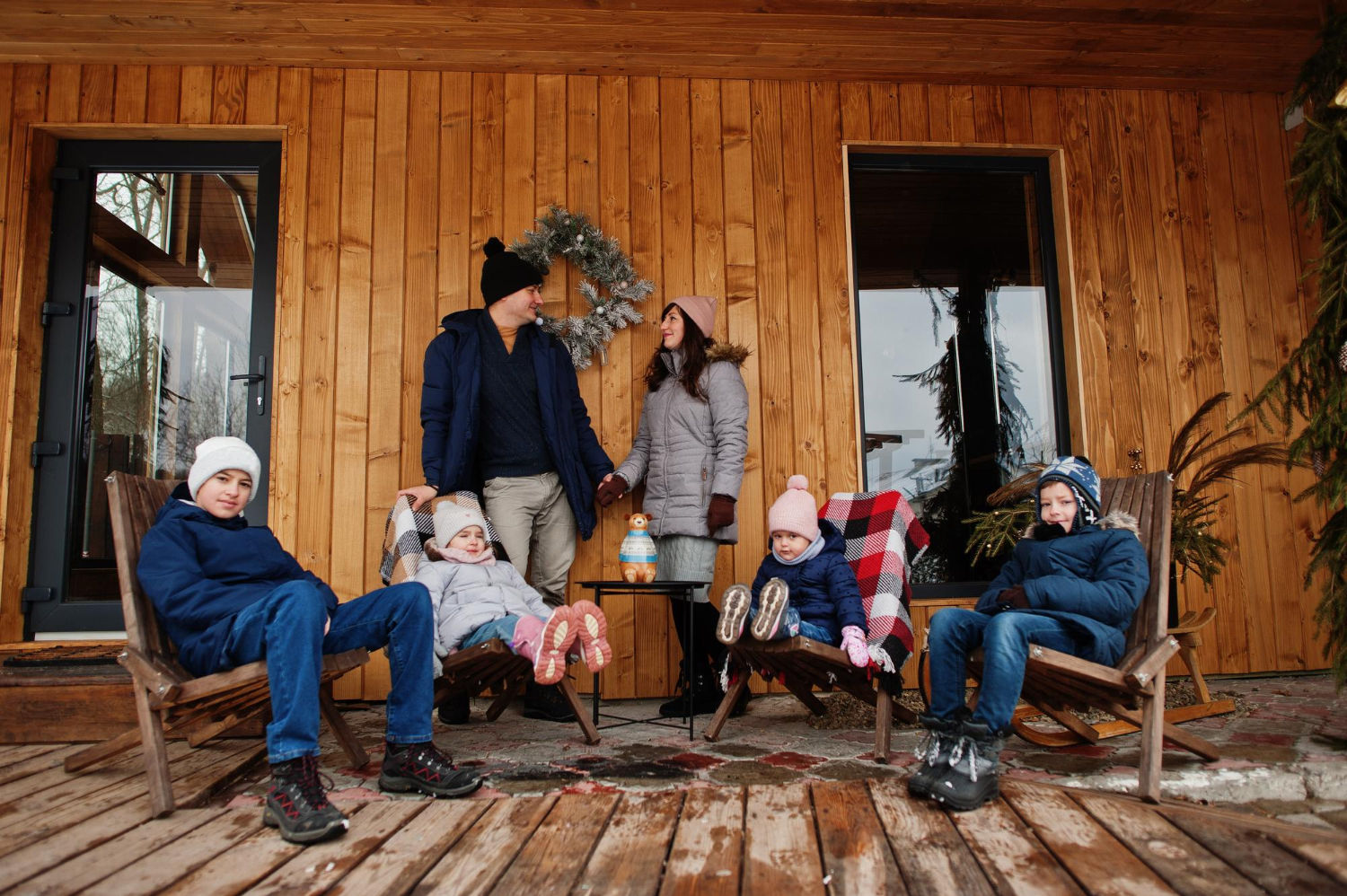
Peace, warmth, and a sense of daily continuity in a mountain home, regardless of weather or grid availability. The comfort provided by stable backup power and well-designed technical infrastructure that remains in the background and doesn't disrupt the rhythm of the day. CC: Freepik
Heating as a system, not a standalone device
Heating in a mountain cabin is rarely directly electric. It is most often based on pellets, heating oil, or gas. For this reason, electricity is sometimes treated as an addition, something secondary. In practice, it is precisely the electrical supply that binds the entire logic of the heating system together and determines its operational continuity.
The boiler controller manages activation cycles and safety. Circulation pumps ensure heat flows through the installation. Mixing valves regulate temperature. Sensors monitor operating conditions. Each of these elements draws a small amount of energy, but together they all require stable voltage and frequency to function smoothly and without interference.
At the moment of a grid power outage, it is the power generator that takes over the role of the energy source for the entire system. If it operates steadily, without voltage fluctuations, the heating simply continues its work. The boiler doesn't reset, the pumps don't stop, and the system maintains its normal rhythm. The house stays warm, and the installation is protected from cooling down.
This is especially important in mountain conditions, where low temperatures can persist for many hours, sometimes days. Stable power for the heating system is not just a matter of comfort, but also protection of the installation from freezing and uncontrolled downtime.
A well-chosen diesel generator ensures the transition to backup power happens in the background. Without alarms, without the need for manual intervention, without stress. That's precisely the difference. Not reacting to a failure, but smoothly transitioning through it, so the technology can once again remain invisible, and the house can function exactly as it was designed to.
Internet and automation as part of daily life
A mountain cabin less and less often means complete disconnection from the world. For many, it is now a space for remote work, peaceful stays outside the city, or rentals that must function predictably regardless of weather conditions. Internet, monitoring, alarm systems, and remote heating control have become a natural part of everyday life.
From a technical point of view, these systems are not demanding in terms of power. A router, an alarm panel, or an automation controller draw little energy. However, the quality of the power supply is crucial. Stable voltage and frequency mean no reboots, no loss of connection, and no situations where systems restart uncontrollably.
In a well-designed backup power system, the generator takes over the load smoothly. The internet in the mountain cabin continues to work, monitoring remains active, and building automation retains its settings. This is especially important in seasonally used properties, where remote monitoring and control are real support tools, not just add-ons.
The effect is simple to feel. Even during a power outage, you can calmly make coffee, check the weather forecast, plan the workday, or coordinate the arrival of guests. Instead of focusing on what just turned off, attention stays where it should be.
Automatic transfer switching as an element of comfort
Manually starting a generator has its charm. There's something analog about it, a bit like lighting a fireplace. However, that charm quickly fades when the power goes out at night, during a snowstorm, or when the cabin is simply empty. In mountain conditions, automatic power transfer switching ceases to be a luxury and becomes an element of daily comfort.
An ATS, or Automatic Transfer Switch, is not itself a large energy consumer. Its role is different. It must detect a loss of voltage, start the power generator, and switch the installation to backup power in a smooth and safe manner. This requires a reliable start from the generator, quick stabilization of voltage and frequency, and good coordination with the rest of the home's electrical installation.
In a well-designed backup power system, this entire process happens in the background. Without alarm signals, without automation resets, without sudden interruptions to heating or internet. The house simply continues to operate, and the user often only learns about the power outage when grid power returns.
It's precisely in such moments that the difference between a makeshift solution and a thoughtful one becomes clear. There's no running out in the snow, checking breakers, or wondering if the generator will start for sure. There is peace. And in a mountain cabin, that's one of the most important functions of the entire system.
Sizing a generator for a mountain cabin
Sizing a generator for a mountain cabin doesn't have to be complicated if you start from the right point. That point is almost always the largest inductive load in the installation. Most often, it's a deep well pump or a pressure tank. This component determines the minimum sensible power level for the generator, as its startup is the most demanding moment for the entire system.
Only once this element is accounted for can you calmly add the remaining loads. Heating in steady-state operation. Building automation. Internet, monitoring, and basic lighting. These elements don't generate large power surges, but they need stable power supply parameters.
In practice, this method very often leads to the same conclusion.
For a typical mountain cabin with a well, heating, and automation, a diesel power generator in the 6 to 8 kVA range proves to be a sensible and reliable solution. It provides sufficient reserve for startups without permanently operating at the edge of its capabilities.
This isn't an extravagant reserve for show or for a future that may never come. It's a reserve that provides peace of mind. The awareness that the system has a margin and you don't have to wonder if everything will start this time.
Why diesel suits the mountains
Choosing diesel for mountain conditions isn't an ideological decision or an attachment to a specific technology. It's a practical choice stemming from the nature of the work and the environment.
Diesel generators handle longer operation under variable loads better. They react more steadily to power demand spikes, which are typical for pump startups and heating system operation. A diesel engine behaves predictably, even when the temperature drops and conditions aren't ideal.
Diesel fuel is also safer to store at low temperatures and less prone to evaporation. Fuel consumption during real operation is easy to estimate, which matters in places where fuel access can be limited or seasonal.
With proper winter preparation, the correct oil, and a healthy battery, a diesel generator operates calmly and consistently. It doesn't require constant attention or surprise with sudden behavior. In the mountains, this predictability is a particularly valued trait.